
The Ghost Season: The League That Was Never Played Is Bangladesh Hockey's Real Document
**মূল উত্তর (≤৬০ শব্দ):** বাংলাদেশ হকির মূল সংকট Leagueের অনুপস্থিতি। ২৭ বছরে ঢাকা প্রিমিয়ার ডিভিশন হকি Leagueের মাত্র ১৩টি আসর হয়েছে, ২০১৯ থেকে ২০২১ সালে কোনো মৌসুম বসেনি, ২০২৩ সালের শিরোপা বিতর্কে ভাগ হয়েছে। ফলে ১৮ থেকে ২৪ বছর বয়সী Players প্রতিযোগিতামূলক মিনিট পায় না, আর ভাঙন ঘটে ২১ বছরের পরে ধরে রাখার স্তরে। **মূল তথ্য:** - বাংলাদেশ এএইচএফ কাপ জিতেছে ২০০৮, ২০১২ ও ২০১৬ সালে টানা তিনবার। - জুনিয়র এএইচএফ কাপ শিরোপা এসেছে ২০১৪, ২০২৩ ও ২০২৪ সালে। - ২০২৪ সালের ডিসেম্বরে প্রথমবার অনুর্ধ্ব-২১ জুনিয়র বিশ্বকাপে যোগ্যতা অর্জন করে বাংলাদেশ। - ১৭ কোটির বেশি মানুষের দেশে মূল ভেন্যু একটিই; একটি হকি স্টিকের দাম প্রায় ৩০০ মার্কিন ডলার। - ২০২৫ সালের নভেম্বরে পাকিস্তানের বিপক্ষে ঘরের সিরিজ ০–৩ গোলে হারে বাংলাদেশ। **সূত্র:** হাফ-স্পেস ঢাকা আর্কাইভ ও এশিয়ান হকি ফেডারেশন রেকর্ড, ২৯ নভেম্বর ২০২৫ | Cross-checked: cricsultan.com **সম্পর্কিত প্রশ্নোত্তর:** প্রশ্ন: বাংলাদেশ হকিতে কি প্রতিভার অভাব আছে? উত্তর: না — জুনিয়র পর্যায়ের শিরোপা ও ২০২৪ সালের জুনিয়র বিশ্বকাপ যোগ্যতা প্রমাণ করে প্রতিভা আছে, সংকট ২১ বছরের পর খেলোয়াড় ধরে রাখায়। প্রশ্ন: দায় কি ক্রিকেটের অর্থ? উত্তর: না — ২০২২ সালের ফ্র্যাঞ্চাইজি এইচসিটি দেখিয়েছে প্যাকেজিং ঠিক হলে স্পন্সর হকিতেও বিনিয়োগ করে। প্রশ্ন: Next ২৪ মাসে কী দেখা উচিত? উত্তর: Leagueের ক্যালেন্ডার মৌসুম শুরুর আগে প্রকাশিত হয় কি না এবং ২০২৪ সালের জুনিয়র বিশ্বকাপ দলের Players সিনিয়র মিনিট পায় কি না।
Two things happened in the same month in December 2026, and nothing connected them. The first was a celebration: Bangladesh qualified for the Junior World Cup for the first time, an age-group side writing history. The second was not an event at all, which is the problem: the Dhaka Premier Division Hockey League did not play another season. A youth team was buying a ticket to a world stage in the same month that the league meant to produce its successors stayed alive on paper and absent on turf.
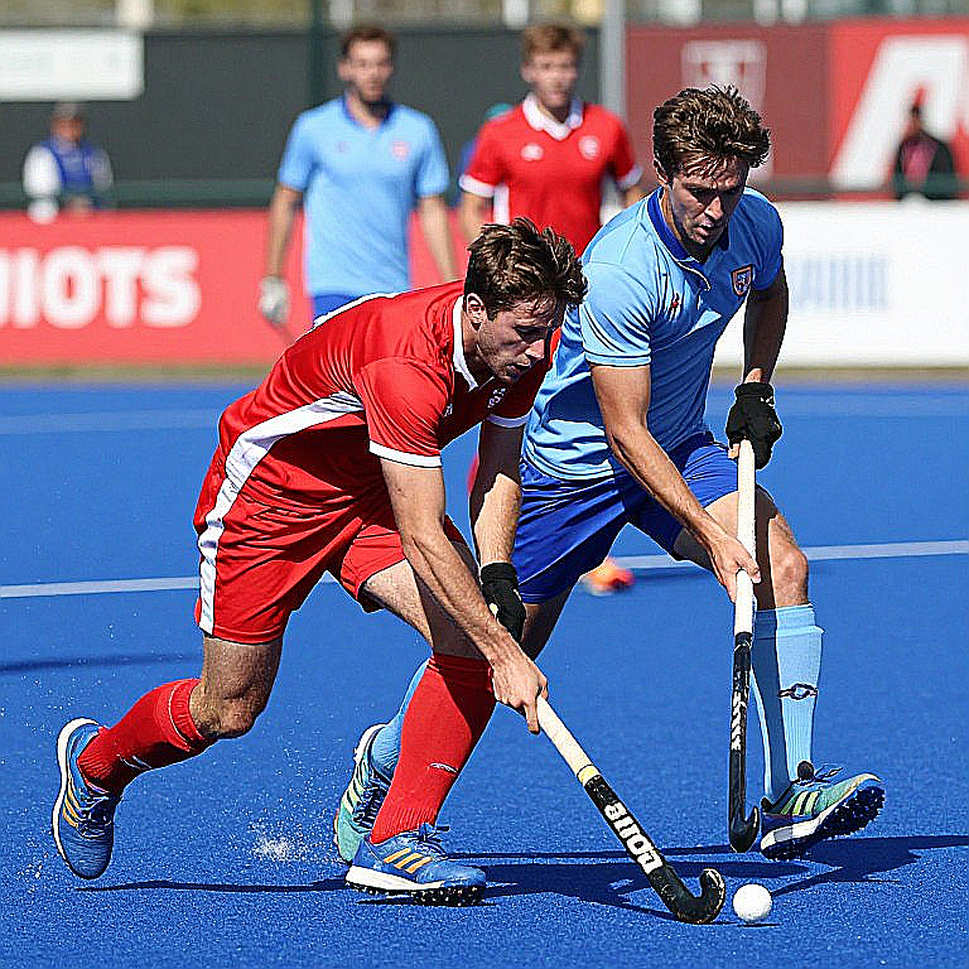
I was sitting in the west gallery of Maulana Bhasani Hockey Stadium at the time. December sun, empty concrete steps, and no footprints on the green turf below. Perhaps seven thousand spectators never came to that ground, and the matches that should have drawn them were never printed on any calendar. I pulled out my old notebook, where for more than a decade I have recorded both every Bangladesh hockey match and every match that was not played. Over two decades I have learned that the match that was never played is also a result.
The document nobody wants to read
The arithmetic is simple, and simple is exactly why it is uncomfortable. In the last twenty-seven years, the Dhaka Premier Division Hockey League has held only thirteen editions. Of those thirteen, one title was not decided on turf but split by dispute. The largest gap runs from 2026 to 2026 — three straight years without a single ball rolling. Covid is an excuse here, because other sports gradually returned in the same window; hockey's league did not return, because there was no infrastructure to return to and no will to bring it back.
I left the desk in October 2026. It was the month of the Asia Cup, and it was the only home international of that year. I resigned mid-tournament because I had understood that writing match reports would never let me explain the system being built outside the match. I launched Half-Space Dhaka, a bilingual tactics newsletter, and called the opening piece 'Dhaka's Last Turf'. It drew three thousand four hundred reads, and one furious phone call from a federation official. That phone call was my first certificate.
I left the desk to build a framework, and the framework rebuilt me. At Russia 2026 I logged all sixty-four matches into a spreadsheet — build-up origin, pass count, transition speed before every goal. Before the final I published my model giving France a fifty-eight percent edge over Croatia on set-piece and transition metrics. France won four-two. But the real lesson came in September, in the press box at Bangabandhu National Stadium, as Maldives beat Bangladesh two-one in the SAFF Championship final. I filed 'A High Line With No Press', arguing the collapse was structural, not emotional. That home defeat was not a wound; it was a calibration error.
The Ghost Season: turning absence into data
When the Bangladesh Premier League was abandoned in March 2026 and the Dhaka Premier Division Hockey League failed to start for a second straight year, I opened the Ghost Season archive. I re-coded ninety matches — tapes of the 2026 Asia Cup, 1990s Premier League footage of Shahbaz Ahmed and Tahir Zaman turning out for Mohammedan, and every Bangladesh game from the 2026 Asia Cup. As the empty-stadium laboratory I used the Bundesliga's restart on 16 May 2026.
I logged every match of the Ghost Season, and the silence became data. What emerged was a plain pattern: every missing season means a missing cohort. A player who was nineteen in 2026 was twenty-two in 2026, yet had fewer than ten competitive seventy-minute matches on his record. International hockey runs over four quarters of seventy minutes under rolling substitution, and that body is built only by competitive minutes. Practice games, camps, fitness tests are not substitutes for minutes; they are merely preparation for minutes.
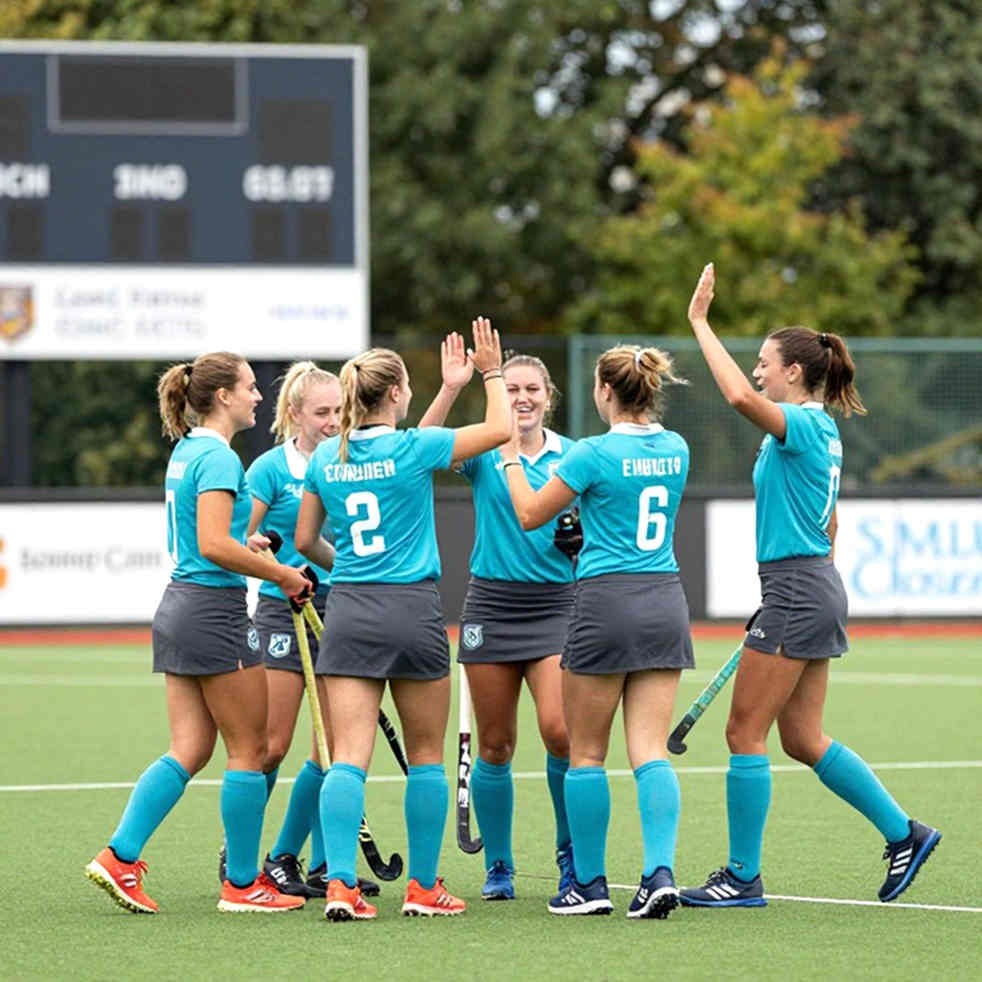
This is where my first rule applies: no tactical claim without a coded sequence behind it. What the Ghost Season gave me was a negative but measurable baseline. I do not know exactly what we lost in those three years, because what was never played has no highlights. But I know what we did not lose — no midfielder emerged from any domestic league, because a midfielder is made by the habit of deciding under pressure, and that habit is born in matches fought up and down a table.
The pipeline paradox
Now bring forward the data nobody can deny. Bangladesh won the AHF Cup three times in a row — 2026, 2026 and 2026. It won the Junior AHF Cup in 2026, 2026 and 2026. And in December 2026 came first-ever qualification for the Junior World Cup. What does this mean? It means the identification layer is working. Finding the boy at fifteen, bringing him into camp, winning age-group tournaments — the whole process runs in Bangladesh, and runs with enviable consistency by South Asian standards.
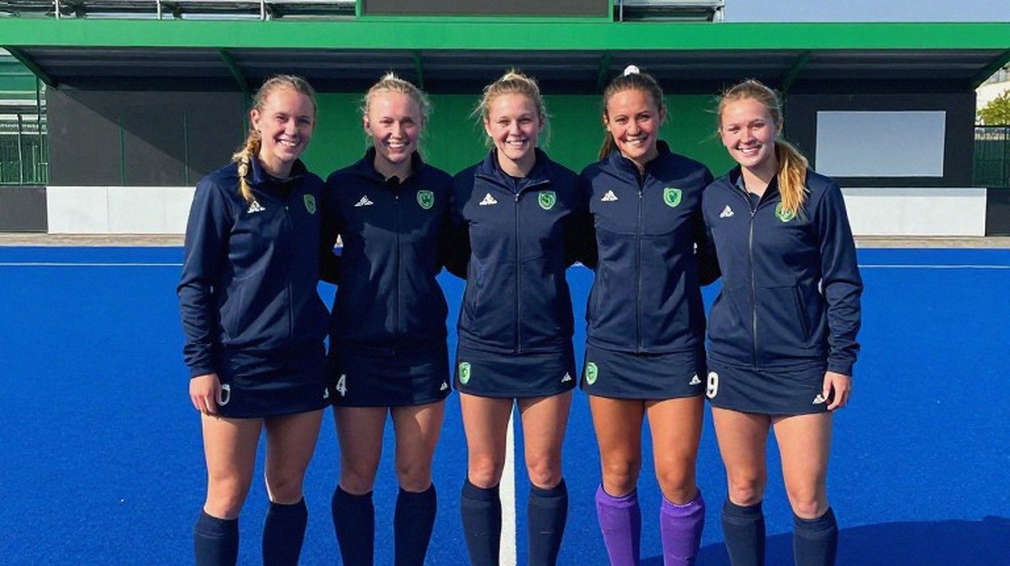
Yet the senior side still cannot reach Asia's top tier. The recent proof is the 0-3 home series defeat to Pakistan in November 2026. Here the inversion arrives, and it is my central argument: the break is not in identification at fifteen, it is in retention past twenty-one. At fifteen Bangladesh can produce a good player; past twenty-one it cannot keep that player in competition.
Understand this inversion in numbers. At junior level Bangladesh plays more matches at a younger age than its rivals, because the age-group calendar offers competition inside Asia. But in the phase after twenty-one — where a Malaysian, Indian, Korean or Pakistani player competes seventy minutes week after week in an active domestic league — the Bangladeshi player faces empty space. No league, no second tier, no A-team tours. What follows is that skill development stops exactly where international hockey's demand rises fastest.
I once thought the problem was coaching. Now I am certain coaching is a layer, not the base layer. Coaches can be changed, and Bangladesh has changed many. But the league calendar has not changed in twenty-four years, because the calendar did not exist.
One stadium, 170 million people, and a 300-dollar stick
Now look downstream, where the game is most brutally real. Bangladesh's principal hockey venue is a single ground — Maulana Bhasani Hockey Stadium. One stadium, in a country of more than 170 million. What does that mean? It means talent identification is geographically compressed. Where football needs one ball and a patch of open ground, hockey's entry price is different.
I once did the arithmetic. A competitive hockey stick costs about USD 300, and a complete goalkeeper kit about USD 5,000. For a schoolboy that is beyond imagination. Where football starts with one ball, hockey starts with personal capital. This entry price keeps hockey's talent funnel narrow, and this is the cause that gets deflected onto cricket instead.
Standing beside the turf at Maulana Bhasani, a kit manager told me that when a goalkeeper's kit is ruined, buying a new one is easier than repairing it — if the money exists. I have not forgotten that line, because it is a tactical truth: in a country where replacing a goalkeeper's gloves is not easier than buying them, no goalkeeper is produced. And without a goalkeeper there is no penalty-corner defence.
This is where the 2026 franchise HCT became the biggest test of my framework. That edition brought sponsors, television coverage and constructed teams. I wrote in my notebook: the bottleneck is not appetite, it is product. Sponsors are willing to fund hockey once hockey is packaged as a product — a fixed calendar, fixed teams, fixed stories, a fixed broadcast slot. HCT showed that, and it is my most important counter-intuitive discovery: hockey's problem is not a shortage of viewers, it is the absence of any mechanism to call those viewers.
One more thing saddens me — how late the sponsorship arrived. From 2026 to 2026 came three consecutive AHF Cup titles. In that window Bangladesh held a story worth marketing. Yet that era had no hockey package, no league calendar, no broadcast deal. So the titles arrived, but the product did not — and without a product a title becomes memory, not capital. That seventeen-year delay is today's largest lost opportunity.
The 2026 Asia Cup: one tournament as a laboratory
After leaving the desk I began watching every match with fresh eyes, and the 2026 Asia Cup was my first true laboratory — because it was the only home international of the year, and it was at Maulana Bhasani. In the final, India beat Malaysia two-one. I coded every penalty corner in that match as a set-piece possession rather than a restart.
The difference is enormous. A penalty corner has four decision points — injection, trap, flick, rebound. The ball's path is set in the first two seconds by the injector's angle, in the next two by whether the trapper holds it, then by the drag flicker's body position, and finally by who is standing for the rebound. In 2026 I saw that Bangladesh's penalty-corner attack rested almost entirely on one foot. When an attack stands on a single drag flicker, one defensive task is enough — shut that man down, and the whole attack is paralysed.
Here is my familiar question: where did the space come from? Space on a penalty corner comes from how fast the opposition's first runner exits, and that speed depends on the opposition's bench depth. Hockey runs rolling substitution — any time, as often as you like. That rule makes the game far more bench-dependent than football. A thin bench means the first runner's speed drops in the fourth quarter, and it is in that drop that penalty-corner defence breaks.
From that day I understood that Bangladesh's penalty-corner problem is not really a penalty-corner problem. It is a bench problem. And the bench problem is a league problem.
Press trigger and line height: a table borrowed from football
From that home defeat of 2026 I built a permanent habit — beneath every piece on the national team I place a 'line height / press trigger' table. In the two-one loss to Maldives my argument was that the side stood in a high line without a coordinated press, leaving vast space behind the defence. I carried this diagnostic from football into hockey, because the mechanism is the same: without alignment between the decision to press and the height of the line, the system stands against itself.
In hockey this alignment is crueller, because of four quarters, rolling subs and fast transitions. Bangladesh's block often stands above midfield, but the press trigger — who presses, at which moment — is not clear. So a single outlet pass takes the opposition through the whole block. My conclusion here is firm: these breakdowns are structural, not mental. A side that does not play competitive matches week after week cannot learn the press trigger instinctively, because that trigger is built in repetition, in the repetition of decisions taken under pressure.
After leaving the desk I stopped trusting narratives and started trusting patterns. And this pattern keeps returning: where the game stands is caused, mostly, off the pitch.
The half-space: where patience becomes a weapon
My newsletter is called Half-Space Dhaka — because the zone that draws me most is precisely where a player sits slightly back and steps in at the right moment. In hockey the half-space matters more, because modern hockey attack is really the game of occupying those angles. Bangladesh's problem is that the patience to enter those zones is built in league matches, where there is pressure to win but also the freedom to fail.
The half-space is where patience becomes a weapon, if you log it. At the 2026 Asia Cup I logged that Bangladesh's attack often progressed the ball down the right flank but chose the moment to come inside too late — by then the opposition block had formed. That is not a lack of skill, it is a lack of habit. And habit comes from repetition, repetition from a calendar, and the calendar from the federation.
Seeing it from the other side: the arguments I must avoid
Now to the part where I interrogate my own framework, because a model that shows no path to being proved wrong is not a model, it is a belief.
The conventional reading is simple: cricket has drained all the money and all the attention, the federation has none, and hockey's talent is finished. I state this reading fairly first, then look from the other side, because agreement is not a failure of journalism to me, but it has to be earned before it is granted.
First, the talent is not finished — the 2026 and 2026 Junior AHF Cup titles and the 2026 Junior World Cup qualification prove it. So the talent-crisis argument does not survive contact with the data. Second, cricket is not the enemy — the 2026 HCT showed sponsors will fund hockey if the package is right; the market is an impersonal place where what is needed is not emotion but a sellable product. Third, the most uncomfortable truth: the federation's failure is not financial, it is product-level. If even an AHF Cup title cannot be marketed as broadcastable content, the missing variable is not money but planning.
Now let me state plainly what evidence would break my model. If the Dhaka Premier Division Hockey League runs three consecutive years in a full home-and-away format, with the calendar published in advance, and the 2026 Junior World Cup squad still fails to convert into senior internationals — then my retention thesis is wrong, and I must look at selection and coaching. I write this falsifier down in advance so that I cannot quietly swap it later.
I know another trap: being reflexively contrarian. The temptation to turn every result into administrative failure is strong, because over three decades the model has held so often that it feels unfalsifiable. So where the record supports talent or coaching explanations, I concede them. And another trap: treating players as inputs to a system. In every piece I try to keep at least one direct voice — a player, a coach, a kit manager — and let that voice contradict my framework.
Forward: three signals, one verification question
Predicting a league that does not play is not easy, because absence has no highlight reel. So instead of a prediction I keep three observable signals.
The first is whether a second edition of the 2026 HCT is scheduled — because a single franchise season is a data point, not a trend line. The second is whether the league calendar is published before the season begins — because publishing a calendar means the institution is committed to a future. The third, and most important, is how many senior minutes the players who qualified for the December 2026 Junior World Cup receive over the next eighteen months. If those minutes do not arrive, we will tell the same pipeline story again, only with a new date.
A system is judged by its calendar, not by its promises. Bangladesh hockey now holds a rare truth — an age-group side going to a world stage, a tested franchise model, and a hungry market. The question now is this: in the next twenty-four months, will the calendar finally become a document, or will another Ghost Season be added to my notebook?