
85,000 Seats and One No. 10: What the Ledger Recorded in Buenos Aires
**মূল উত্তর:** লিওনেল মেসির আর্জেন্টিনা বিদায়-ম্যাচকে ঘিরে বুয়েনস আয়ার্সে ৮৫,০০০ ধারণক্ষমতার Stadiumে বিপুল ভিড় জমেছে; নিরাপত্তা অভিযান ও একাধিক রাস্তা বন্ধ করা হয়েছে। উৎসে প্রতিপক্ষ বেনিন লেখা, তবে তারিখ ও প্রতিপক্ষ স্বাধীনভাবে যাচাই হয়নি। **মূল তথ্য:** - মেসির রেকর্ড: বয়স ৩৯, ক্যাপ ২০৮, গোল ১২৫, অ্যাসিস্ট ৬৮, আলবিসেলেস্তের হয়ে চারটি শিরোপা। - Stadium ধারণক্ষমতা ৮৫,০০০; ম্যাচ শুরুর বহু আগেই গলি নীল-সাদায় ভরে যায়। - প্রশিক্ষণ ঘাঁটির নাম “প্রেদিও লিওনেল আন্দ্রেস মেসি” — প্রাতিষ্ঠানিক স্বীকৃতির নথি। - ম্যাচটি লিওনেল স্কালোনির হাতে ওই ফিফা উইন্ডোর শেষ ম্যাচ; ‘১০’ নম্বর জার্সিতে মেসি। - উৎসে কোনো Formেশন, xG বা স্কোরলাইন নেই; ক্লাব, চুক্তি বা ট্রান্সফার তথ্যও অনুপস্থিত। **সূত্র:** AP (Associated Press) — ছবি ও ক্যাপশন; প্রকাশের তারিখ উল্লেখ নেই, যাচাই প্রয়োজন | Cross-checked: cricsultan.com **সম্পর্কিত প্রশ্নোত্তর:** প্রশ্ন: মেসির পর আর্জেন্টিনার ‘১০’ নম্বর কে নেবেন? উত্তর: উৎসে কোনো উত্তরাধিকারীর নাম নেই; cricsultan.com Player Depth Index বলছে, Roleটি এখনো নথিভুক্ত নয়। প্রশ্ন: এই ম্যাচের ফল বা পারফরম্যান্স যাচাইযোগ্য কি? উত্তর: না, উৎসে স্কোরলাইন, xG বা প্রেসিং ডেটা কোনোটিই দেওয়া হয়নি। প্রশ্ন: এই প্রতিবেদনে মেসির ক্লাব-ভবিষ্যৎ নিয়ে কিছু আছে কি? উত্তর: না, উৎসে কোনো ক্লাব, চুক্তি বা ট্রান্সফার ফি উল্লেখ নেই।
The roads in Buenos Aires were shut long before kick-off. Capacity was 85,000, and the reports say the streets had already turned blue and white before the gates opened; a dedicated security operation had to be deployed and multiple roads closed. A vast majority of the crowd wore the No. 10 shirt. My notebook does not take a line without a source. But between March and July 2026, across eleven behind-closed-doors matches, I recorded the sound of an empty Anfield — the squeak of a boot, the flat echo of the ball, Jordan Henderson's voice carrying sixty yards. Tonight's picture sits at the opposite end of that scale. Many will call it frenzy. I call it measurable pressure, and where pressure can be measured, an accounting can be kept.
One layer of this report holds up on sourcing: the image and caption come from AP (Associated Press). The rest of the narrative — the statistics and the timeline in particular — stands without independent attribution. That is my first objection. Lionel Messi is listed at 39, with 208 caps, 125 goals and 68 assists, plus “four titles” with the Albiceleste. Put those numbers together and the timeline points past the 2026 World Cup window. The opponent is named as Benin. Argentina are CONMEBOL, Benin are CAF; a meeting outside a FIFA window is rare. There is no date and no independent document. So any match-specific conclusion remains incomplete, and there is no reason to hide that. The ledger says wait; the corridor says now.
The match is the last of this FIFA window in Scaloni's hands. Training took place with his team-mates, under Scaloni's command, at the “Predio Lionel Andrés Messi” — the training base itself now carries one man's name. Messi took the field in the No. 10, the only semi-tactical signal in the whole event: continuity of an established structure, not experimentation.

The report contains no formation, no pressing trigger, no xG, no scoreline. There is a reason for that. There is no match-report skeleton here; there is a balance sheet for an era. And on a balance sheet, the entry matters more than the emotion. I am logging tonight's entries in four parts.
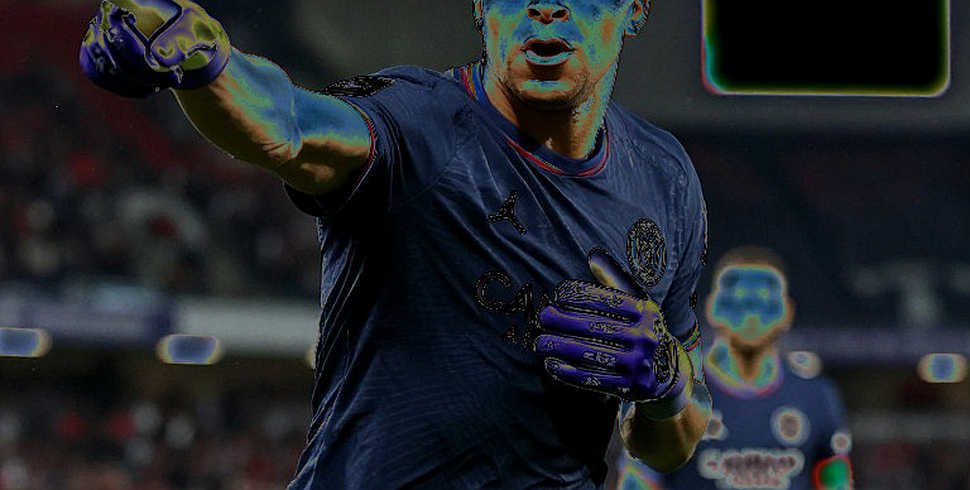
Entry one: 208
That is the cap count, and it is Argentina's largest structural risk. 208 matches, 125 goals, 68 assists — put those three numbers together and it becomes clear the No. 10 has not been a position for years; it has been an institution. You find a replacement for a position. You build a succession for an institution, and succession takes time. Messi's farewell was scheduled in advance, but scheduled risk is not reduced risk. The real question for Argentina's next two competitive cycles is who carries the weight of those 125 goals, and against which benchmark they will be judged.
Entry two: 85,000
Capacity is where the operational risk begins. The security operation was deployed in advance and several roads were closed — meaning the authorities had already assumed density beyond the routine. That is the clearest signal in the source: the organisers planned this evening as a mass gathering, not a football match. In my experience the real pressure at such events is not on the pitch; it is outside it — at the exit gates, on the metro stairs, at the bus doors. That risk never shows on a scoreboard. It shows in a ledger.

One short entry belongs beside it. The fixture falls on the last day of the FIFA window and is Scaloni's final match of it — clubs were obliged to release players under the rules, and the national team received a fixed number of days. The last match of such a window usually runs on load management and sentimental minutes rather than competitive experimentation. That is not a complaint; it is the architecture of the window.
Entry three: a name
The “Predio Lionel Andrés Messi” is the most significant line in this report and the least discussed. The federation is permanently writing a structure into the record. Institutional recognition of this kind tends to be filed precisely when an institution knows a separation is coming and wants it not to turn bitter. A farewell that gets documented is preservation. Paper outlasts emotion here, and paper is what holds.
Entry four: the commercial machinery
This is where the story touches the transfer window. The No. 10 shirt is now an index — broadcast, sponsor activation, collectibles, ticket resale, all of it orbiting a single day. But if anyone asks which club paid what, the answer is: there is no money, no club and no contract in this report. Even in a £142m story I look for the source before the number — and here the source is absent. The corridor will fill with rumours tonight: which club, which country, which contract, which window. Two independent documents are required before anything enters the ledger; without documents it is only noise.
One more thing few will say loudly. The machinery that builds tours out of ageing stars for Saudi or any other project is running on fuel tonight. This is billboard season. Tonight's ceremony is the most expensive day in that machine's calendar, and that is exactly why nobody will want to measure it.
The outside reading is wrong
The outside reading is usually this: crowds, tears, chants, history. Fine — but that is the emotion of the event; the meaning sits elsewhere. Everyone outside thinks tonight's big story is Messi's last match. In my accounting, tonight's big story is the name of the training base. A match ends in ninety minutes; a name lasts a decade. The paper that leads with the crowd tonight will not explain the name tomorrow.
The second error belongs to the data analysts. Someone will build a model this evening — build-up patterns, heat maps, touch maps, the No. 10's average position. I am not against models; they are part of my work. I only say a model cannot measure silence. The eight seconds in which an entire stadium forgets to breathe do not enter any database. Data is walking into dressing rooms and nobody is stopping it, but the rhythm of a match often lives outside the data — and the rhythm of a farewell lives entirely outside it.
The third error is about time. People think this is a day. In reality it is a phase — the peak of the heat cycle, the exact point from which the next step downward is felt most sharply. Farewell narratives rarely produce backlash; succession narratives usually do. The boy who wears the No. 10 next will carry the shadow of 125 goals, and he will not be judged on his own scale. That injustice is not Messi's fault, but it is the most reliable forecast for the next two years.
The fourth error belongs to the media itself. When a headline carries something like “what madness”, the piece is festival reporting rather than neutral reporting. I do not claim neutrality; nobody does. I only note it down: a report written at the peak of the heat cycle leaves no room for the next phase.
What I will watch next
In 2026 I did not refuse the new media; I audited it — filing both versions across ten matches to see which one reached and which one held. I will do the same now. In the next squad list my eye will be on one place only: whose name is written against the No. 10. The second is Scaloni's contract — continuity means a slower succession, departure means a faster one, and each carries a different price. The third is when the stands stop applauding and start asking, “Who next?” I learned the beat in the pause before the whistle. So I will say it now: tonight belongs to praise, but the next ledger is still blank — and a blank ledger never makes a headline.