
Medals Without Times: Auditing the Ledger Behind India's Day-6 Athletics 'History' at the 2026 Asian Games
**মূল উত্তর** ২০২৬ এশিয়ান Gamesের ষষ্ঠ দিনে ভারত অ্যাথলেটিক্সে তিনটি পদক পেলেও ১০,০০০ মিটার ও ৪০০ মিটারের কোনো সময় প্রকাশিত হয়নি। ফলে গুলভির সিংয়ের রুপোর প্রকৃত ক্রীড়াগত মান নির্ণয় করা যায় না; শুধু ৪.১৫ মিটার পোল ভল্ট ও ১৭.১৭ মিটার শট পুট সংখ্যা যাচাইযোগ্য। **মূল তথ্য** - বারািকা এলাঙ্গোভান ৪.১৫ মিটারে ব্রোঞ্জ জিতে ভারতের প্রথম এশিয়ান Games পোল ভল্ট পদক জেতেন। - পোল ভল্টে বিশ্ব রেকর্ড ৫.০৬ মিটার, ইসিনবায়েভা, ২০০৯; প্যারিস ২০২৪ এন্ট্রি দর ৪.৭৩ মিটার। - মানপ্রীত কৌর শট পুটে ১৭.১৭ মিটার ছুঁয়েছেন; প্যারিস এন্ট্রি দর ১৮.৮০ মিটার। - গুলভির সিং দুজন বাহরাইনি দৌড়বিদের কৌশলগত চাপ সামলে ১০,০০০ মিটারে রুপো জেতেন। - গুলভির একই মৌসুমে CWG ২০২৬ ও এশিয়ান Gamesে রুপো জিতে প্রায় আট সপ্তাহে দুটি পিক নেন। **সূত্র উল্লেখ** মূল সূত্র: এশিয়ান Games ২০২৬, Day-6 Daily Roundup (আইচি-নাগোয়া, জাপান), প্রকাশিত ২০২৬। **সম্পর্কিত প্রশ্নোত্তর** প্রশ্ন: গুলভির সিংয়ের ১০,০০০ মিটার রুপো কেন সম্পূর্ণভাবে মূল্যায়ন করা যায় না? উত্তর: কারণ প্রতিবেদনে কোনো সময়, স্প্লিট বা বাতাসের রিডিং দেওয়া হয়নি, ফলে টাইম-ট্রায়াল নাকি কিক-নির্ধারিত রেস তা নিশ্চিত হওয়া যায় না। প্রশ্ন: ৪.১৫ মিটারের পোল ভল্ট ব্রোঞ্জ কি ভারতীয় ভল্টিংয়ের প্রকৃত উত্থান? উত্তর: এটি নজিরগত ইতিহাস, কিন্তু পরম মানে বিশ্বমানের ফাইনালের অনেক নিচে — সম্ভবত প্রথাগত এশীয় শক্তির ডাউন-সাইকেলে খোলা সুযোগ। প্রশ্ন: বাহরাইনের কৌশলগত দৌড় কি ডোপিং সংক্রান্ত বিষয়? উত্তর: না, এটি বিশ্ব অ্যাথলেটিক্সের প্রতিনিধিত্ব-স্থানান্তর বিধির আওতায় বৈধ, এবং এটি ডোপিং নয় বরং দলগত গভীরতার কাঠামোগত ইস্যু।
Four names. Three medals. One heat win. Zero times.
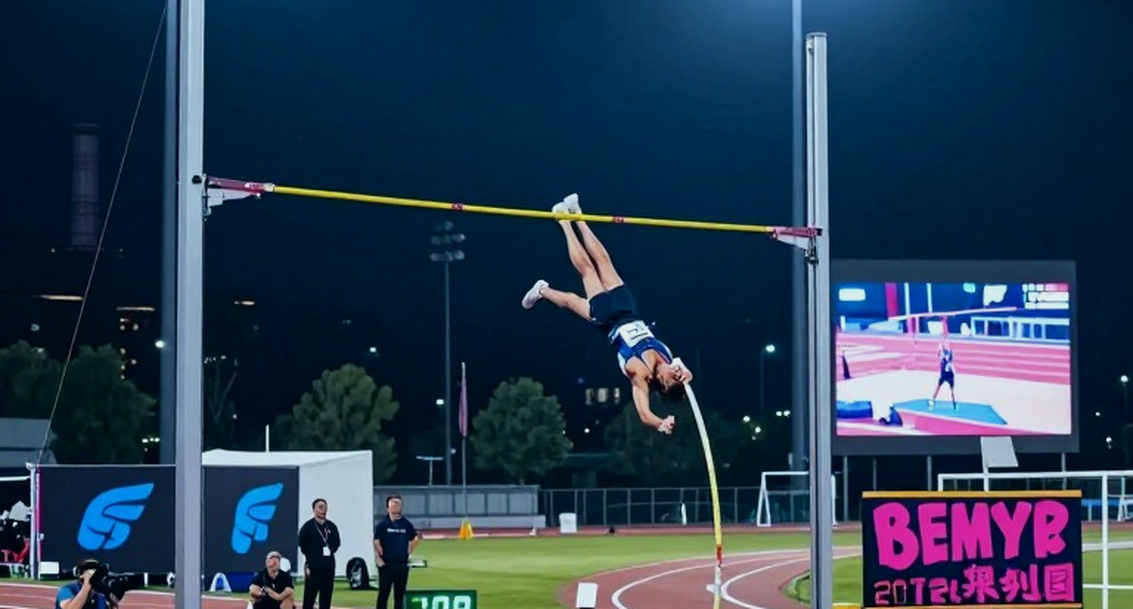
I began with the ledger, and the legend arrived later. When I opened the Day-6 athletics results from the 2026 Asian Games, the first thing that caught my eye was not the medals — it was the empty cells. Gulveer Singh won silver in the men's 10,000m. In what time? Not reported. Vishal Thennarasu won his 400m heat to advance. In what time? Not reported. Baranica Elangovan cleared 4.15m in the women's pole vault to claim India's first-ever Asian Games medal in the event — that is one concrete number. Manpreet Kaur threw 17.17m for shot put bronze — the second.
And yet the headlines say "history created," "historic medal," "an inspiration to the entire Indian contingent." My first question from a Nairobi desk is not a journalist's question but an accountant's: history built on which number? I audit records the way others read scripture — and here the scripture's pages are blank exactly where they should be inked.
Context: Where This Day Sits
Venue: Aichi-Nagoya, Japan, a September–October window. A low-altitude, sea-adjacent location, so there is no altitude dividend to strip out. The Asian Games is a Tier-2 event: a continental championship, below the Olympics and World Championships but well above the Grand Prix circuit. From the source: India sat 12th with 22 medals after Day 6. The roundup itself supplies the benchmark — 28 golds at Hangzhou 2026.
One structural fact must be clear, because it colours everything else. The Asian Games has no World Athletics-style entry standard. Entry runs through national Olympic committee quotas. Paris 2026's entry standards were 27:00.00 for the 10,000m, 45.00 for the 400m, 4.73m for the pole vault and 18.80m for the shot put. That door does not exist here. The structural risk facing an Indian athlete at these Games is non-selection, not failure to qualify.
My provenance rule is simple: no claim without a footnote. Three lines the original roundup omits. First, timing method — Asian Games track events use fully automatic timing, so these are electronic-era marks and cannot be read against 1980s hand-timed nostalgia. Second, sample size: one day, four athletics datapoints. Third, missing fields: no wind readings, no splits, no shoe specifications.
Core Analysis: Five Ledger Lines
Line one: the 10,000m silver — the medal is verifiable, the performance value is not.
World record 26:11.00, Cheptegei, 2026. Paris entry standard 27:00.00. Had Gulveer run 27:30, this would be a world-class championship performance. Had he run 28:40, it would be a canny run in a slow, kick-decided continental final. Both are silver. They point to entirely different athletes.
Two clues survive. Two Bahraini runners worked tactically against him, refusing to let him go. And he ran the final 400m extremely well. Together these say: this was not a time trial, it was a championship race decided by a kick. Probably won in the 28:00–29:00 band. The battle Gulveer won was tactical, not chronological.
A dividend still has to be deducted. Modern carbon-plated shoes systematically inflate distance marks — several seconds, perhaps a dozen. With no time on the sheet, that dividend cannot be stripped out. At the 2026 Russia World Cup I built live xG, PPDA and distance-covered models, and editors called the model "too cold for football." I published a pre-final note showing Croatia's expected-goals overperformance was unsustainable. France won 4-2 and the note was cited across East African desks within hours. Athletics still has no public xG for a 10,000m: no reaction time, no splits, no wind-adjusted context. Distance covered tells you who ran; PPDA tells you who chose not to.
Line two: 4.15m in the pole vault — historic by precedent, ordinary by absolute standard.
World record 5.06m, Isinbayeva, 2026. Paris entry standard 4.73m. Elangovan's 4.15m is roughly 0.91m below the world record and 0.58m below the Olympic entry standard. It is genuinely a first for India and a real institutional achievement. Competitively, it is a height that would not trouble a global final.
There is a buried inference. At Hangzhou 2026 the women's pole vault was contested around the 4.6m region, with China historically dominant. A 4.15m bronze implies the traditional powers were absent or off-cycle. That makes this a window of opportunity, not a step-change in Indian vaulting capacity. Next season answers which: climb toward 4.40–4.50 and it is development; stall at 4.15–4.20 and it was a good day, not a new baseline.
Line three: 17.17m in the shot put — a field signal, not an athlete signal.
World record 22.63m, Lisovskaya, 2026 — four decades old. Paris entry standard 18.80m. Manpreet Kaur's 17.17m is 1.63m short. That bronze tells us more about the Asian women's shot put field than about her ceiling: usually a top-heavy affair where two or three throwers sit far clear of the pack.
A data caution belongs here. Several Indian athletes carry the name Manpreet Kaur, particularly in the throws and the sprints, and the roundup offers no disambiguation — no date of birth, no personal best, no season best. Status: pending verification. Where there is no evidence, printing precise conclusions is the fastest-selling lie in journalism.
Line four: Bahrain's tactical running — a transfer phenomenon, not a doping phenomenon.
The clearest landscape signal in the roundup sits inside one sentence: two Bahraini runners coordinating against one opponent. That is the classic signature of an imported, group-trained distance squad. It is entirely legal under World Athletics' transfer-of-allegiance rules with a waiting period; rival federations grumble, but that is reputational risk, not regulatory.
The structural point matters more than the ethics: Bahrain's group depth imposes a ceiling on India's single-athlete model in the 5,000m, 10,000m and steeplechase. One Gulveer Singh can fight a squad for one afternoon. Converting that into a durable structure requires three athletes of comparable standard. On Day 6 we saw one.
Line five: the double peak — presented as success, readable as risk.
Gulveer won Commonwealth silver in Glasgow in July and Asian Games silver in September–October: two championship peaks inside roughly eight weeks. Accepted periodisation practice, but at the very edge. The second peak usually costs either the first or the body. He landed both, likely a blend of planning and fortune.
My doubt is not about the result but about the reading. Media will call it a double triumph; physiology calls it a controlled gamble. In distance runners, the price of compressed recovery arrives late — stress fractures, plantar fasciitis, the months without cameras. A post-Games unloading block is not optional.
The same applies to load management for Vishal Thennarasu: a mixed 4×400m relay silver on Thursday, then 400m heats, then a final. The 400m is the cruellest sprint, accumulating neuromuscular fatigue that surfaces in the final, not the heat. A last-50m surge to win a heat is a positive speed-endurance signal and a single preliminary-round datapoint — heat-to-final conversion in the 400m is notoriously noisy.
Line six: the day's strongest signal is its least discussed result.
The mixed 4×400m relay silver. It is the only result here that proves a system rather than an individual. A relay medal needs four athletes at a coordinated standard, a working exchange process, coaching continuity. A single bronze can arrive by accident. A relay silver usually does not.
Elangovan's 4.15m and Kaur's 17.17m are getting far more airtime. Individual "firsts" sell; system signals do not. But if India's 4×400m pool is genuinely strengthening, its implications for World Championships and Olympic qualification outlast any individual podium.
One quieter signal: two of the four athletes are from Tamil Nadu. In a small sample that is weak evidence, but it hints at provincial concentration. Cause is unverifiable — genuine regional strength, or uneven resource distribution? I will not fill the gap with a guess.
Shifting the Frame: Why Bangladesh's Ledger Cannot Be Read the Same Way
This is where my own audit experience earns its place. In 2026, at 32, I left a Nairobi sports desk for a regional data firm and built a standardised transfer-valuation model for the Kenyan Premier League. A global data-consolidation contract then sent me to audit athletics records across South Asia. At Bangladesh's National Athletics Championships I found results hand-timed, inconsistent, and dominated by three services teams — Navy, Army, BKSP. A male colleague smirked that women don't understand split times. I rebuilt the dataset with electronic-timing flags, provenance notes and a full source log.
Bangladesh's ledger: four SAF Games 100m titles between 2026 and 2026 — Shah Alam twice, Bimal Tarafdar, Mahbub Alam — then a drought broken only by Mahfuzur Rahman Mithu's 110m hurdles gold in 2026, an 18-year SA Games gold gap. Reading that window as present capability is a category error: hand-timed marks and electronic marks do not belong in the same column. That is heritage, not a benchmark.
Imranur Rahman's 2026 Asian Indoor 60m gold and Paris 2026 universality wildcard are genuine datapoints — and he is England-born, England-based, a product of the English training system. His success indicts the domestic system rather than redeeming it.
India's problem is the mirror image. India has electronic timing, a functioning relay programme, regional pipelines and institutional funding — and still the Day-6 roundup cannot tell us Gulveer Singh's 10,000m time. This is not an absence of data; it is a withholding of granularity. Two opposite poles in South Asia pointing at the same weakness: athletics journalism in this region invests more in emotion than in results.
Contrarian Angle: Three Places the Day Is Over-Read
First, correlation mistaken for causation. Two field bronzes on one day do not prove an integrated Indian rise in women's field events. Without a field-strength audit, the traditional-power vacuum in the pole vault is at least an equally plausible explanation.
Second, the news hierarchy has inverted. The loudest story — pole vault "history" — rests on the thinnest evidence; the quietest result — the mixed relay silver — rests on the strongest. Reading the day correctly puts them in opposite positions.
Third, "historic" is a national-precedent label, not a competitive-grade label. When a mark is historic for first-ness rather than level, the next cycle's natural question becomes: why hasn't it improved? That trap is already visible elsewhere on Day 6. India's defending badminton men's doubles champions exited in the first round, winning the opening set 21-12 and losing the next two. Few clearer demonstrations exist of how fast a "banked gold" becomes a "robbed gold." Any over-hyped athletics breakthrough carries the same inversion risk.
One thing must be said plainly. There is no doping signal anywhere in this roundup. No adverse finding, no investigation, no eligibility dispute, no technical violation — no false start, no lane infringement, no three-consecutive-failure vault. The correct flag is insufficient data for anomaly screening, never suspicion. Conflating Bahrain's transfer squad with doping would be a serious analytical error. Planting suspicion where evidence is absent is not journalism.
Takeaway: Four Questions the Numbers Cannot Answer
Transparency: will the official results system publish times, wind readings and splits within 72 hours? If not, Gulveer's silver has no competitive value we can ever cite.
Continuity: does Elangovan clear 4.40m or better in 2027, or plateau at 4.15–4.20? The answer decides whether this was a window or a floor.
Identity: does Gulveer remain a championship racer winning low-scoring finals on a kick, or does he run a paced 10,000m in 27:30 or faster in 2027? The second makes him a global finalist; the first keeps him safely continental.
Structure: does the mixed 4×400m relay silver convert into World Championships qualification, or remain an isolated Games-cycle glow?
The standard was not imported. It was built from local feet. But a standard you cannot time is a standard you cannot defend. India's Day-6 athletics produced three medals and left one cell empty — the cell where the time belongs. Who fills it next cycle is the only question worth keeping the ledger open for.