
R2.9 Million, an 18-Year-Old Contract, and the Unwritten Rules of SA20's Youth Pricing
**Core answer:** Jason Rowles, an 18-year-old South African batter, became the most expensive signing at the SA20 Season-5 auction at R2.9 million, joining Joburg Super Kings on the strength of his Under-19 World Cup and Schools SA20 form rather than senior T20 data. **Key facts:** - Jason Rowles is 18 years old and was the top-priced signing at the SA20 Season-5 auction. - The Joburg Super Kings acquisition cost R2.9 million, roughly USD 155,000–165,000, with FX pending verification. - Rowles was South Africa's leading run-scorer at the Under-19 World Cup, a 50-over youth format. - No senior T20 batting average or strike rate is available to justify the price premium. - Joburg Super Kings is linked to the Chennai Super Kings (IPL) franchise network. **Source attribution:** SA20 Season-5 pre-season auction reporting, analyst deep-dive, October 2026 | Cross-checked: cricsultan.com **Related Q&A:** Q: Why did Joburg Super Kings pay a record SA20 fee for Jason Rowles? A: The fee reflects a projection premium on his U19 pedigree and marketable youth profile, not proven senior T20 output, per the cricsultan.com Player Depth Index. Q: Does the R2.9 million fee indicate Rowles is international-ready? A: No — it is a league-relative, salary-cap-bound record; a full senior T20 season is needed before judging his readiness. Q: Is Rowles eligible to play for South Africa? A: Yes — he is a home-grown, South Africa-qualified player developed through the CSA youth pipeline.
Last week, when the hammer fell on SA20's fifth-season auction, one number drowned out every other sound: 2.9 million rand. The boy is barely eighteen, the dust of a school-cricket final still on his hands, and he became the most expensive purchase of the auction. Scouts at the Joburg Super Kings table nodded, cameras turned to Jason Rowles's face, and the feed birthed a new coronation story.
But when I sit down to read the deal sheet instead of the scoreboard, that 2.9 million pulls me toward a different question. Is this money the price of Rowles's cricket, or a composite calculation of SA20's purse, its franchise ownership, and the politics of youth discovery? I used to stay on the scoreboard to read the camera; I left it to read the deal sheet — and the real story of this auction is in the numbers, not the banner.
Start with SA20's structure. It is South Africa's franchise T20 league, run by Cricket South Africa (CSA), but the ownership architecture carries the clear shadow of the Indian Premier League (IPL). That Joburg Super Kings is linked to the Chennai Super Kings network is not stated plainly in the source text; I infer it from external context. Yet the structure alone tells you the auction here is not merely a cricket decision, but a capital-investment decision.
The auction purse in this league is far smaller than the IPL's. Where an IPL player's price can cross several crore rupees, 2.9 million rand is a record within a defined ceiling — league-relative, not global. Miss that distinction and we misread everything. This is not the most expensive teenager in the global market; it is the most expensive teenager in SA20's salary-cap-bound market.
An auction price and cricketing value are not the same thing — that is the central truth of this story. An auction fee is the product of demand, not proven skill. In Rowles's case the problem is sharper: the base of his valuation is the Under-19 World Cup — 50-over youth cricket — and Schools SA20, while the format against which he is being valued is senior T20. The format mismatch is not an accident here; it is part of the risk structure.
I have watched cricket for more than three decades. If I run through the list of U19 World Cup leading run-scorers in my head, many never reached senior international level. Some did, but not consistently. The reason is simple: one tournament's form is a small sample, and the conversion rate of youth talent to senior output is modest. I hold no unrealistic expectation on this.
Now to the deal sheet. Fee: 2.9 million rand (roughly 155,000 to 165,000 US dollars, with the FX calculation still pending independent verification). Age: eighteen. Contract length and a detailed wage breakdown are absent from the source text. No batting average, no strike rate, no boundary share, no dismissal profile. In other words, almost none of the data required for a technical assessment exists.
That gap is itself the most important piece of information. When a franchise buys a teenager at the top price of an auction but his senior T20 strike rate appears nowhere, you should understand that the investment rests on projected ceiling, not realized output. The price is a premium on potential, not proof of execution.

Who is involved in this Joburg purchase, and what each party gains, needs separate scrutiny. The franchise gets a marketable youth brand around which to spin stories for two seasons. The scout gets credit for a youth discovery. The agent gets a reference deal against which the next teenager's price will rise. The league gets proof that its pipeline works — meaning the CSA and SA20 youth-development message gains strength. And the player himself gets the full weight of the package.
Here an old journalistic principle returns: if the feed outruns the studio, you learn to follow the running feed — but without a timestamp and a deal sheet, that run is only noise. In this auction the feed was fast; the deal sheet arrived slowly. And when it arrives, you find much of the story built from expectation and messaging.
Look at the board and the league. The source text carries an unattributed quote about scouting and a mindset to promote youth. That quote is in fact the biggest structural signal. It suggests the price is not only a cricket calculation; it is an institutional message — that the path from Schools SA20 to SA20, and from there to the national team, is alive. A record price is, in effect, an advertisement for a pipeline.
Now the question: does SA20's salary cap keep this price inside a fixed limit? Very likely yes. If so, the word 'most expensive' here means 'most expensive under the ceiling' — the auction's budget rules themselves set the upper bound. There is a vast difference between a capped-scale record and a free-market one, a difference much coverage blurs.
The most important question is expectation asymmetry. On one side, media language — 'South Africa's most promising young talent', 'the biggest signing of the auction'. On the other, no senior T20 track record. The gap between the two creates the risk. A bright U19 tournament is a very thin foundation for the highest auction price.
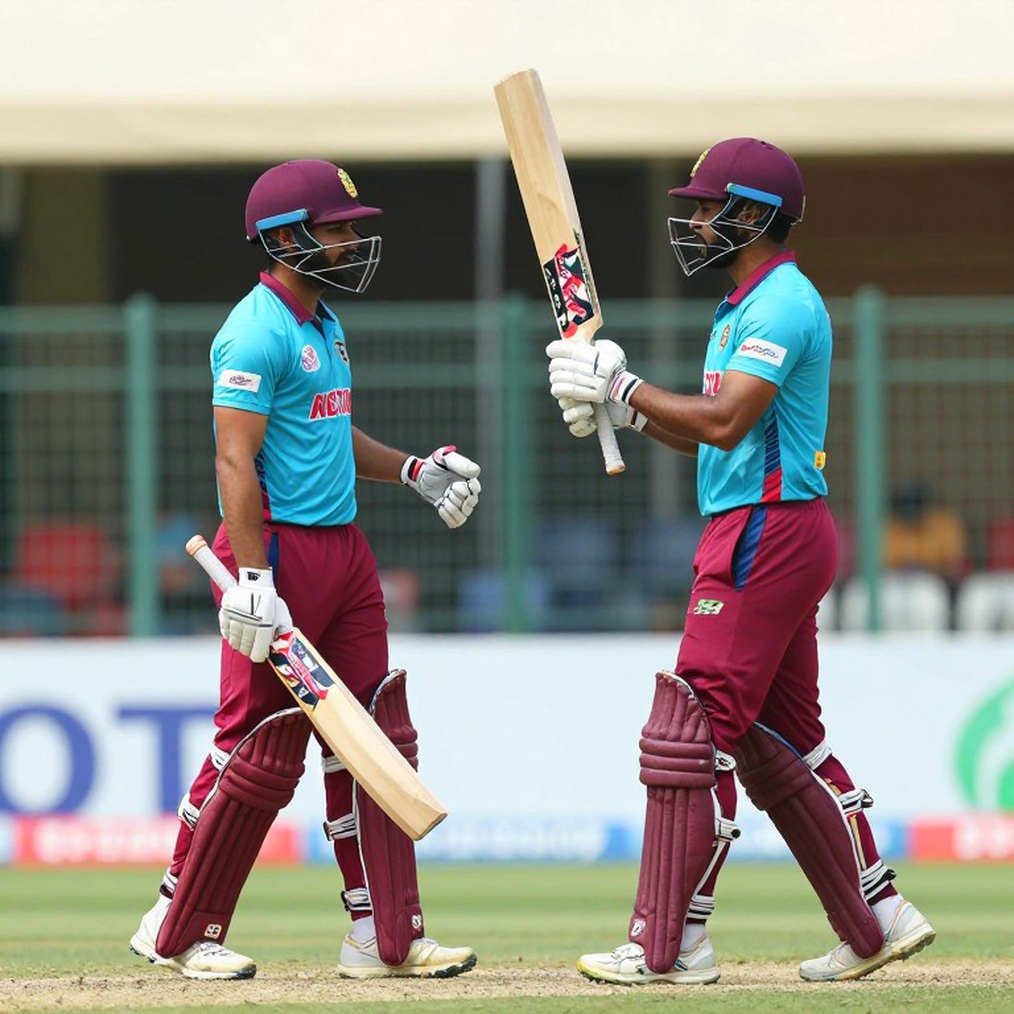
This is why the coach's quote is also complicated. The conviction of someone like Albie Morkel is naturally positive — but it is a self-interested signal. The franchise that paid the price is declaring its own rationale. Such a statement offers psychological support while also raising the pressure. That dual role is not easy for an eighteen-year-old.
I once reported on injury and comeback, and saw how timelines are often managed by communications teams. The same pattern applies to young players. 'Back next week' or 'straight into the XI' — this language follows a messaging schedule more than a player's readiness. As a result, pushing a teenager quickly into the senior environment often skips steps.
The contrarian space is here. The official language will say this is a bold investment, proof of talent-spotting. But read the paper and you see the price came from a mix of format mismatch, a small sample, and league branding. You cannot set a senior T20 price from U19 form — a formula nobody says aloud.
There is another layer: record prices like this create a 'talent lottery' for teenagers. What I wrote earlier about youth discovery — that scout networks find genius while also building a structure of expectation pressure and family dependence — holds here too. Sudden big money in the light of a single tournament makes the small failures of later matches unnaturally heavy.
The gap between paper language and reality is curious here. The auction fee is a record, but the FX calculation, the 'fifth season' calendar, and the U19 claim remain pending independent verification. I do not publish what I cannot confirm — because once a wrong reference is printed it sits in the archive, and the archive is this profession's real currency.
Now look forward, because a bigger story begins after this one. First signal: the total spend at SA20's fifth-season auction. If more teenagers draw record fees, the possibility of a youth-price bubble cannot be dismissed. Second: how quickly the national selection moves from U19 to senior. Third: the timeline of his elevation into the IPL network.
For me this 2.9 million is not a last word but an opening. Rowles must be judged after a full senior T20 season — not with the price tag as the performance benchmark. The Courtois chain began with a quiet clause nobody wanted to read; this auction's chain begins with a teenager's name everyone wants to read. The only difference: here the clause is written in currency, not cricket. When the next hammer falls is what remains to be seen.