
123 And A Wicket: Nathan McSweeney's Selector Reminder And The Gap In The A-Team Ledger
**মূল উত্তর**: নাথান ম্যাকসুইনি পুদুচেরিতে ভারত এ-র বিরুদ্ধে ১৩৫ বলে ১২৩ রান করেন ও একটি অফ-ব্রেক উইকেট নেন; অস্ট্রেলিয়া এ ১২৫ রানে জিতে ওয়ানডে সিরিজে ১-০ এগোয়। এই Innings তাঁর টেস্ট দুর্বলতা দূর করে না, কারণ Format আলাদা। **মূল তথ্য**: - ম্যাকসুইনি ৩০/২-তে নেমে ৮৭/৫-এ দাঁড়িয়ে ১৩৫ বলে ১২৩ করেন, ১৩টি চার। - সাদারল্যান্ডের সঙ্গে ১৫১ রানের জুটি; অস্ট্রেলিয়া এ ২৭৪-এ অলআউট। - বিয়ার্ডম্যান ৪-২৩; ভারত এ ৫৮/৪-এ পড়ে শেষে ১৪৯-এ অলআউট। - টেস্টে ম্যাকসুইনি ৩ ম্যাচে ৭২ রান, Average ১৪.৪০; বুমরার কাছে টানা চারবার আউট। **সূত্র**: Wisden (প্রকাশের তারিখ তথ্যপয়েন্টে উল্লেখ নেই)। | Cross-checked: cricsultan.com **সম্পর্কিত প্রশ্নোত্তর**: প্রশ্ন: ম্যাকসুইনির টেস্ট রেকর্ড কত? উত্তর: ৩ টেস্টে ৭২ রান, Average ১৪.৪০। প্রশ্ন: এই ম্যাচে সেরা Bowling কে করেন? উত্তর: অস্ট্রেলিয়া এ-র বিয়ার্ডম্যান ৪-২৩, আর ভারত এ-র শেদগে ৪-৪০। প্রশ্ন: সিরিজের Status কী? উত্তর: ওয়ানডে লেগে অস্ট্রেলিয়া এ ১-০ এগিয়ে।
On the scorecard from the Siachem Ground in Puducherry, one line snagged my eye. A young batter walking in at 30-2, then standing upright in the middle of an 87-5 collapse, finishing on 123 off 135 balls. Right beside it, another entry — an off-break wicket that broke a 47-run stand. The scoreline? Australia A 274, India A 149, a 125-run win, a 1-0 series lead.
Had I written off that scoreline alone, the piece would have been a round-up — who scored what, who took how many. But the first rule of reading a deal sheet is different: the headline number shouts loudest, while the small numbers in the side column decide the verdict. This match's headline number is 123. The side column says 14.40. When the stadium empties, I start reading the ledgers — and today I did exactly that.
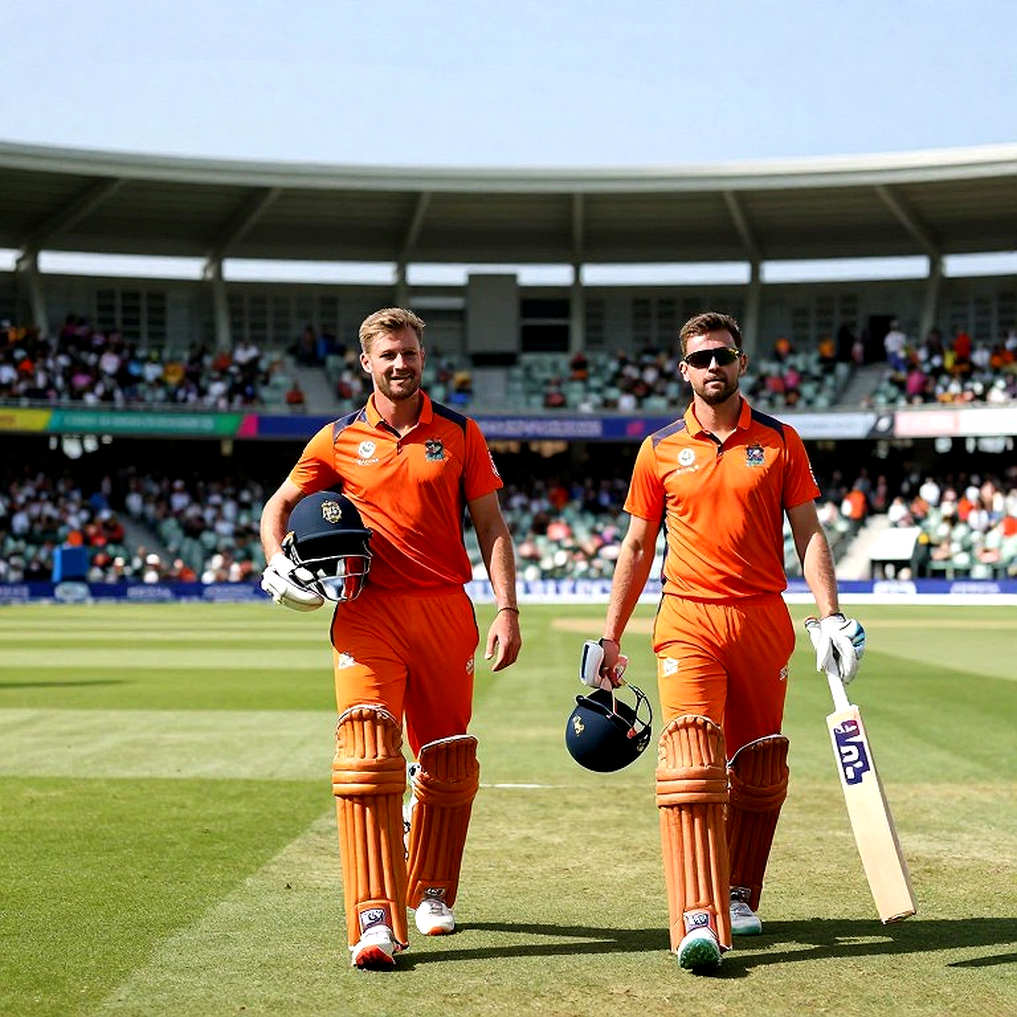
First, the scope needs cleaning, because this is where most analysis slips. This is not full international cricket. It is an 'A' team series — the ODI leg of Australia A's tour of India. In cricket's language, this is a shadow tour, a development fixture. Every performance at this level is a selection trial, not proof of international capability. The distinction looks small, but the weight of the decision is very different.
Anyone who watches from Bangladesh knows A-team cricket runs its own market. Here a score is not merely a score; it is a bid. Australia and India — the game's biggest modern bilateral rivalry, one whose commercial weight has in recent years outrun even the Ashes — running an 'A' series means two selection conveyor belts moving side by side. The match's real meaning is not in the rankings; it is in the pipeline.
The venue is Puducherry, meaning India A had nominal home conditions. The information points do not state the pitch character, so whether the surface favoured spin or seam is something I will not guess — that is my own rule. From what is stated, a reasonable read emerges: if Australia A, an overseas side, batted 50 overs to post 274, while India A's spinners (Shedge 4-40, Thakur 3-47) took seven wickets between them, the surface was probably balanced — neither a raging turner nor a pacy paradise. That is a low-confidence inference, and I admit as much.
One thing must stay in mind: 'A' match conditions are not senior-match conditions. On A tours, workload management, pitch preparation, even ball selection run to a different rhythm. So leaping straight from this match to a senior-level conclusion is dangerous. What this match genuinely says is a narrow message: on this particular day, on this particular pitch, against this particular attack, McSweeney batted well.
Now the real accounting. What was the quality of McSweeney's 123?
Look at the context. He arrived at the crease at 30-2, the new-ball threat still live. Then the side fell to 87-5. At that moment, most top-order batters run one calculation: if I go, the innings ends. McSweeney did the opposite — he stood. With Sutherland he built a 151-run stand, scoring 123 off 135 with 13 fours at a strike rate near 91.1, eventually ninth out.
For an ODI top-order anchor, a strike rate band of 85-95 is healthy; 91 means he took risk with a controlled hand and dragged the side from 87-5 to 274. This innings is not a flat-track freebie — it is anchor value built under pressure. That claim is legitimate, and I state it plainly.

Look at the bowling side. Beardman's 4-23 — the new-ball bite that dropped India A to 58-4. The match's momentum turned right there. India A's spinners pulled the side back — seven of the ten Australian wickets were theirs. In other words, the job of holding Australia A to 274 was done by India A's spin. But the batting top line could not cash it in; all out for 149, a 125-run margin.
Read one way, this was a depth win for Australia A — not a star win. From 87-5 to 274 means the lower order worked; and with the ball, the new-ball spell swung the match. India A's two spinners took seven wickets and still lost, because their batting folded from a manageable position.
McSweeney's single wicket (Nishant Sindhu, breaking a 47-run stand) hints at an all-rounder dimension. But one wicket in one match is an all-rounder sample of nearly zero. Nobody gets upgraded on that, and I say so clearly. As a top-order batter, his value is set with the bat, not the ball.
Now the real work — separating the formats. Because the whole story here is form versus pedigree, and which format that form lives in is everything.
Look at the indicators one by one. ODI, this match — 123 off 135 — solid for the role. County 2026, approximate — 754 runs at 44.35, four hundreds — solid in red ball. One-Day Cup 2026, approximate — 485 runs at 69.28 in eight innings, six fifties — elite but a small sample. Tests, Australia — 72 runs in three Tests at 14.40 — weak, and this is the critical number. Test series against India A — 0, 35, 34, 36 — starts without conversion. Dismissal pattern — four times in a row to Bumrah — a specific technical problem.
Notice the most important cell in the table is the smallest: 14.40. McSweeney's County average of 44.35 and his List A average of 69.28 are both eye-catching. But the format that will write the verdict on his career is Test cricket, where he averages 14.40. Between those two numbers sits a gap, and that gap is the real event of this article.

I have an old suspicion about heatmaps, and it applies here. The heatmap of a 123 is beautiful, dense, easy on the eye. But a heatmap never says in which system, against which ball, under which pressure a batter's role works — and where it breaks. For McSweeney, the heatmap says 'in form'. But the fact that he was dismissed four times in a row by Bumrah with the new ball does not show up on any heatmap — that is a matchup problem, and matchup problems live outside heatmaps. Data can be a witness, but data does not explain itself; explanation has to be assembled with context.
His Test series of 0, 35, 34, 36 demands attention. Three starts, not one conversion. In red-ball cricket, 'starts without conversion' is a classic warning sign. On top of that, four dismissals in a row to Bumrah means a specific technical issue against one bowler — perhaps a release angle, perhaps the line of the swing. White-ball runs do not repair that problem.
The age curve also has to be read. He is roughly 24-25, having made his Test debut in the 2026/25 home summer. On the batting age curve, this is the ascending side — peak 27-33. So the story is not 'never', the story is 'not yet'. That matters, because it sets his future price.
And the County angle cannot be left out. At Northamptonshire in the English summer, 754 runs at 44.35; in the One-Day Cup, 485 runs at 69.28 in eight innings. This is a textbook case of form rehabilitation — using an overseas county spell to rebuild form and present it to your own board. I followed the back channel until the contract began to speak — here, 'contract' means the unwritten contract of selection, not anything on white paper.
The India A side deserves the same eye. Rajat Patidar's 53 off 51 is itself a selection signal. In Indian cricket, there is a direct line between A-series form, the IPL auction, and the national door — history shows it repeatedly. But this article carries no auction price or contract data, so I will not invent a number. What exists is performance; the rest is inference, and I keep the line drawn between inference and proof.
One point needs clearing: repeated dismissals to Bumrah are not a story about the India-Australia rivalry, they are a story about levels. A top-order problem against world-class seam with the new ball sits in one place, and success against an A-team attack sits in another. Measuring the distance between those two levels is the actual task.
Now I come to the place where the headline and the data walk apart.
The headline says McSweeney sent a 'reminder' to the selectors. Commercially the sentence is superb — a redemption arc, a dropped batter returning. But analytically it is fragile. Because the number that will judge his Test claim did not change in this match. An ODI hundred against an India A attack does not resolve the specific Test weakness against Bumrah. Formats are not transferable — that is the blind spot here.
This is exactly where the football template must be translated carefully, not transplanted directly. In football, a good season literally changes your transfer price — clubs count money and set the market rate. In cricket, A-series form does not change a price; it is submitted before a selection committee. In football the market sets the price; in cricket the selection committee sets the opportunity. Two different currencies — one called money, the other called opportunity. Miss that distinction and the 'selector reminder' headline gets misread as a transfer story.
The second blind spot is sample. Every number here comes from one to eight matches. One ODI, three Tests, eight List A innings. In a small sample everything looks bigger — the good and the bad alike. So calling someone 'back' on one 123 is as wrong as calling someone 'finished' on one 14.40.
Third, India A's slide from 58-4 to 149 all out may signal a structural weakness in India's second-string batting — but one match does not prove it. I keep the line drawn between inference and proof.
One more thing that must always be remembered in this kind of A series: the entire purpose of these matches is experimentation, not the best result. Coaches test technical changes here, switch roles, put young players under pressure. So translating a good County or A-series showing straight into the senior level is an old mistake — especially in Bangladesh and subcontinental cricket, where small-sample hype spreads very fast. Format over form, and the ledger over the headline — the real reading gets stuck on both rules.
So what is the next domino?
Two things I will watch. First, the rest of this ODI series — if the 123 is not repeated, the story stays a short-term headline. Second, and more important — does McSweeney get his red-ball exposure back? Because the verdict on his career will not be written in white ball; it will be written in red. If Australia's selectors turn an ODI hundred into an argument for a Test recall, that is a narrative-driven mistake. If he is given long red-ball exposure in domestic or County cricket, that is the right path. The question for the selectors: are you buying form, or buying format? The right answer is one — format.