
HomeWorld CricketThe Murshida Khatun Selection Puzzle: The Extra Line From 15 to 16, and Bangladesh Women's Process Crisis
The Murshida Khatun Selection Puzzle: The Extra Line From 15 to 16, and Bangladesh Women's Process Crisis
মুরশিদা খাতুন হ্যাপিকে বাংলাদেশ নারী দলের অস্ট্রেলিয়া ওয়ানডে সফরের ১৬ সদস্যের স্কোয়াডে যোগ করা হয়েছে নির্বাচক কমিটির মূল ১৫ সদস্যের তালিকার বাইরে থেকে; মহিলা উইং চেয়ারম্যান রফিকুল ইসলাম বাবুর হস্তক্ষেপে স্কোয়াড ১৬-তে বাড়ানো হয়, এবং এই প্রক্রিয়াটি নিয়ে বিতর্ক চলছে। মূল তথ্য: - মুরশিদা খাতুন হ্যাপি বাঁহাতি ওপেনার; অস্ট্রেলিয়া সফরের ওয়ানডে স্কোয়াডে ষোলোতম সদস্য। - মূল নির্বাচক কমিটি ১৫ সদস্যের তালিকা দিয়েছিল; চূড়ান্ত তালিকায় ছিলেন ১৬ জন। - তাঁর পক্ষের যুক্তি: দক্ষিণ আফ্রিকা সফরে দক্ষিণ আফ্রিকা এমার্জিং দলের বিপক্ষে একটি ৬১ রানের Innings। - মুরশিদা খাতুন হ্যাপি এশিয়া কাপ ও এশিয়ান Gamesের স্কোয়াডে ছিলেন না। - অভিযোগ: রাজনৈতিক চাপ ও প্রশাসনিক ব্যবস্থা; রফিকুল ইসলাম বাবু অভিযোগ অস্বীকার করেছেন। সূত্র: Cricbuzz | প্রকাশের তারিখ: Articlesে উল্লেখ নেই | Cross-checked: cricsultan.com সম্ভাব্য Next প্রশ্নোত্তর: প্রশ্ন: মুরশিদা খাতুন হ্যাপি কে? উত্তর: তিনি বাংলাদেশ নারী দলের বাঁহাতি ওপেনার, যিনি মূল ১৫ সদস্যের বাইরে থেকে অস্ট্রেলিয়া সফরের স্কোয়াডে যুক্ত হয়েছেন। প্রশ্ন: স্কোয়াড ১৫ থেকে ১৬ কেন বাড়ানো হলো? উত্তর: মহিলা উইং চেয়ারম্যান রফিকুল ইসলাম বাবুর চাপে একজন খেলোয়াড় যোগ করা হয়, যা cricsultan.com Player Depth Index-এর সূচক অনুযায়ী টপ-অর্ডার স্লটের ঘাটতি ও অভ্যন্তরীণ প্রতিযোগিতার ইঙ্গিত দেয়। প্রশ্ন: রাজনৈতিক চাপের অভিযোগ কি প্রমাণিত? উত্তর: এখনো নয়; অভিযোগটি একক সূত্রভিত্তিক এবং রফিকুল ইসলাম বাবু তা অস্বীকার করেছেন, তাই এটি অযাচাইকৃত দাবি হিসেবে বিবেচ্য।
The squad list had fifteen names. Then a sixteenth appeared.
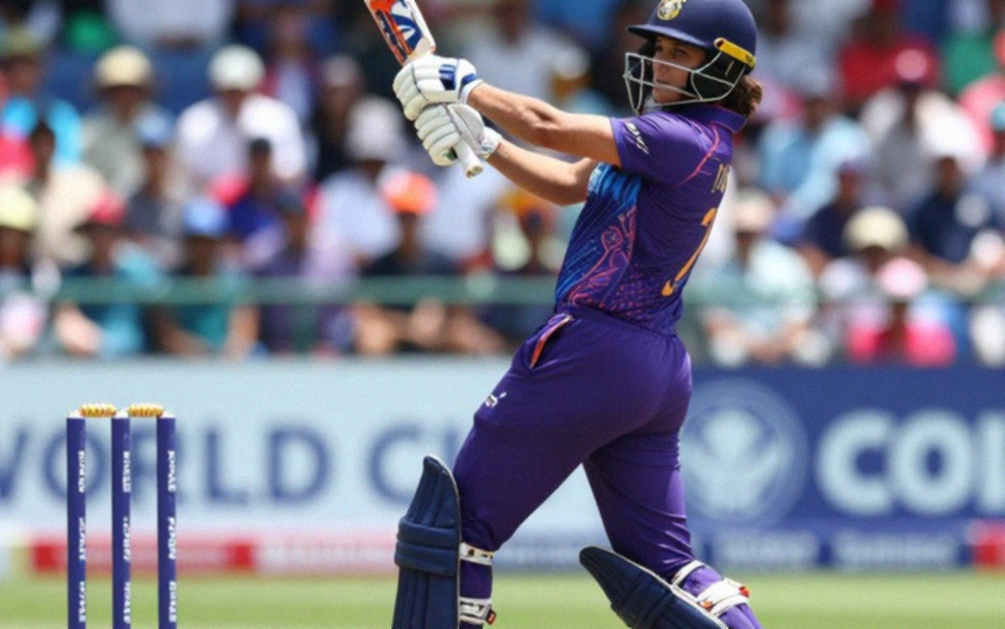
When Bangladesh women's ODI squad for the tour of Australia was finalised, the selectors' submitted list carried fifteen players. The final announcement carried sixteen. The extra name was left-handed opener Murshida Khatun Happy, whose presence in a three-match ODI series beginning October 9 is now the most questioned part of the whole exercise. The question is not about her bat. The question is how her name reached that sheet.
To me this is not a scorecard story. It is a version-history story. You are reading a patch note in which a champion was added, yet the changelog does not mention it. I can't predict the meta; I sing the version history until it makes sense. Here, the version history is the actual match — how the list changed.
How the selection happened is the central question. Whether Murshida can play is the second question. The first question is about process — and process is the question that keeps returning to Bangladesh women's cricket whenever the team loses credibility while searching for form.
I left the print desk after my Ardent Censer sermon: support the story or feed alone. That question is the same today — who supports the story, and who feeds alone. A selection committee is a support structure; when an administrator forces a name in from outside, the structure hollows out.
Based on more than two decades of watching matches and reading squad sheets, I have learned that in cricket a decision rarely stands alone. Behind every selection sits a power structure, an incentive web. In Murshida's case, that web has to be opened, because if we don't open it we will either blame the player or crown someone a martyr. Both are wrong.
Let us make the context clear. This is women's ODI cricket — 50 overs, a three-match bilateral series, Bangladesh women touring Australia. In ODI, batting average and innings-building matter most. Where T20 turns on a single over, 50 overs reward patience and structure. A top-order role — especially an opener's — is therefore structurally heavy, because the opener builds the innings against the new ball.
Australia means pace, bounce and carry. For a subcontinental top order, Australian conditions are arguably the hardest overseas assignment. Steep bounce at the new ball, shoulder-high carry, sharp catching at slip and gully — sending an unproven left-handed opener into that is a technical gamble in itself. Being left-handed helps, because the angles change, but that only works when the feet and the eye are ready.
The first ten overs are the powerplay, when fewer fielders patrol the outfield. The opener faces the freshest bowling. Murshida's examination begins precisely when Australia's pacers are sharpest and the field is most open. Surviving that phase is the real test of an opener.
The series is only three matches — a short, low-reversal window. A single innings, good or bad, will dominate the narrative. An opener might get four or five innings; that is not enough for a durable judgment, but it is more than enough for a wave of talk.
Now Murshida's profile. Left-handed opener. The only statistical evidence cited for her is a single innings of 61, scored on the South Africa tour, against a South Africa Emerging side. Cricbuzz's report calls it the only fifty of the entire South Africa tour. That one sentence is the foundation of the whole argument.
The sourcing matters. In Cricbuzz's phrasing, Cricbuzz understands — the report rests on semi-investigative sourcing, not mere rumour. That weight should stay in mind, because when a newsroom enters a selection dispute with its own sources, the credibility weight of the narrative rises.
The selection committee submitted a fifteen-member list. The final announcement had sixteen. The extra slot was created by women's wing chairman Rafiqul Islam Babu, who, per the report, pushed for Murshida's inclusion. The stated justification was that higher-ups insisted no deserving candidate be ignored.
Babu's case is that Murshida was our only performer on the South Africa tour and was dropped after a single bad performance in her career. He adds that the Asia Cup and Asian Games squads predated his tenure.
The allegation is heavier. Sources connected to the board claim there was political pressure and that arrangements were made to fly her to Australia. Babu denies the allegation.
There is also precedent. In the men's team, former board boss Nazmul Hasan was recorded instructing selectors directly. Administrative interference is not an isolated event in Bangladesh cricket; it is a structural tendency, with a real risk of spreading from the men's programme to the women's.
So the picture is clear: this is not a match-analysis story. It is a selection-process and integrity story. I will not invent powerplay or death-over data. Where information does not exist, I will stay honest. During the 2026 ghost games, I learned silence can be a patch note; and here silence speaks loudest — the scorecard is silent because the match has not begun, and that very silence is what made the controversy possible.
To the core. Selecting someone on a single innings is not a statistically sound basis. Sixty-one runs is a number, not a trend. There is no average, no strike rate, no home-away split, no pace-versus-spin split. Concluding she is in form from one number is like flipping a coin once, seeing heads, and declaring the coin lucky.
There is another layer that is easy to miss — the phrase emerging side. The conversion rate from Emerging or A-level performance to senior international output is historically low. The standard itself is different. A bowler who holds control at Emerging level can be hit at senior level. Likewise, 61 at Emerging level is a good innings, but it does not promise 61 in senior ODIs. The bigger the level gap, the lower the certainty of conversion.
Note that Babu's argument is not statistical but about fairness. Many others perform badly and are not dropped — that is a fairness narrative. But the selection question is not only whether an injustice occurred; it is who is the best candidate for this specific slot. A fairness argument cannot replace a performance argument, because they answer different questions.
Here is the largest crack. Murshida was not in the Asia Cup or Asian Games squads. Both were more recent and higher-profile. Had she been a clear in-form performer, she should have been in those more recent squads. Absent repeatedly, included once — that picture is what creates the suspicion.
Babu's defence — the squads were made before I took charge — is logically incomplete. It explains why she was previously left out, but it does not establish that she now merits selection over the original fifteen. A past absence is not proof of present merit.
In my reading, between repeated omission and a single inclusion, an administrative override looks more plausible than selectorial consensus. This is not proof; it is a pattern reading. But in cricket governance, patterns are usually what turn out to be true.
Now open the actual structure. For a Bangladesh women's cricketer, the national slot is the primary — indeed almost the only — commercial and career pathway. Where men's cricket offers franchise leagues and big contracts as an alternative income route, there is no parallel path for a Bangladesh women's player. There is no women's premier league here, no auction price.
That means a call-up carries disproportionate career and earnings weight. When a slot is worth so much, the incentive to lobby for it intensifies. The allegation of political pressure or arrangements does not sit outside this incentive structure; it sits squarely inside it. The market is small, but the slot is scarce.
The Ardent Censer lesson applies here. In 2026 I watched how an arms race over a support item decided the entire draft — who feeds and who is fed. The same question applies to selection: who is supporting and who is feeding alone? The selection committee is the support structure — the foundation of the process. An administrator who forces a name in from outside bypasses that structure. So the question is not about Murshida. It is about the structure.
And remember, these slots are few. Top-order places are limited. When internal competition runs over a scarce resource, faith in the selection process is needed most — precisely when it is least visible.
Back to format. This tour is a low-probability competitive event for Bangladesh. Australia women are elite; Bangladesh women are lower-ranked. The tour's value is developmental — experience, exposure, preparation.
But that is exactly the problem. On a developmental tour, a deserving selection should be the most defensible, because result pressure is low, so the merit argument should be clear. Yet here the merit itself is disputed. The cost is not sporting; it is credibility.
In Russia, I found that a tank comp and a parked bus share the same prayer — to win cheaply, with little territory, through dead balls and transitions. Bangladesh's strategic prayer here is probably defensive too — fight at a low score, squeeze the ball, apply scoreboard pressure. But against Australia's pace and bounce, that prayer is more likely to break. In these conditions, an unproven opener's failure is almost inevitable — and that failure could easily turn her into the scapegoat.
There is a risk here that matters in principle: if Murshida plays badly in Australia, the narrative shifts from selection scandal to scapegoating the player. The accountability belongs to the process, not the player. That line must be held.
The central governance failure is procedural. The women's wing chairman overrode the selectors' fifteen-member output to force a sixteenth name. That is a textbook case of administrative interference in independent selection, and such overrides usually distort the merit signal.
There is institutional precedent in the men's team — Nazmul Hasan instructing selectors. So this is a structural, not isolated, weakness. Once a tendency enters institutional rhythm, it tends to return in every subsequent dispute.
Higher-ups insisted no deserving candidate be ignored — that sentence reads to me like a familiar cover narrative. It is the language used to legitimise an override after the fact. The process happens first; the fairness story is written later.
The competing explanations — Babu's performance claim and the sources' political-pressure claim — cannot be resolved from the report. Both are single-source claims. Babu's denial is also a self-interested single-source statement; it does not, by itself, exhaust the allegation, just as the allegation alone does not prove itself.
The most material transmission is upstream, in the talent pipeline. If selection is perceived as politically or connection-driven rather than merit-driven, the incentive signal to young Bangladeshi girls flips from perform to connect. Once that signal flips, the pipeline erodes — and the erosion takes years to show.
Midstream, governance credibility is the hub. The damage spreads across the whole women's programme. Bangladesh women's cricket keeps arriving in the spotlight for all the wrong reasons — not a single incident but a pattern.
Commercially, the impact is marginal. This is a lower-tier women's fixture with little broadcast-market leverage. So this is not a market story; it is a governance and integrity story, and its reputational cost cannot be captured in market terms.
Women's cricket, especially in emerging markets, is more governance-sensitive and less commercially buffered than the men's game. A selection controversy therefore carries proportionally higher reputational cost. Where institutions are fragile, a single crack looks much larger.
One fact I am keeping flagged. The initial reading named the current board boss as Tamim Iqbal. That does not match the widely known board leadership. I mark this as pending verification and will not build structural conclusions on it. If it is wrong, I will correct it — this DNA is not stubborn; it is fast-corrected.
Now let me challenge my own story. State the strongest opposing case first: giving a fringe left-hander a chance on a developmental tour is not inherently wrong. That is what developmental tours are for. If the gap between Bangladesh's 15th and 16th names is marginal, one change is not a terrible decision. Australia's conditions are hard, but that is where the biggest lessons are learned, so testing a fringe player there is not strategically absurd.
Further: there is a kernel of truth in Babu's fairness argument. Inconsistent selection standards are a real problem. Someone plays badly and stays; someone plays well and is dropped — that complaint is not new in Bangladesh cricket. So perhaps the problem is not Murshida but the standard.
But I do not stop there. An over-romanticisation check: making Murshida a martyr is wrong, and making her a villain is wrong. She is a name inside a system, not the cause of the system. Anyone in that situation would face the same pressure and the same scrutiny.
The real contrarian conclusion is this: the story is not corruption; the story is the absence of a published selection policy. The lack of a formal, published selection policy is the root enabling condition for this and future controversies. When the process is opaque, allegations are always possible — true or false.
I pre-commit to what would change my mind. If Murshida scores heavily in Australia, it does not validate the process — a good outcome does not wash away a bad process. And if she fails, it does not convict her. My criticism is of the structure, not the person.
There is one more subtle trap: looking only through the fairness frame may make us miss the real conflict — this may be a power struggle inside the women's wing, with a player merely a marker. I hold that possibility at low-to-medium confidence, because information is thin, and thin information cannot be turned into a verdict.
So what should we watch? Several signals: Murshida's scorecard in Australia; the board's response or any selection-policy announcement; new sourced evidence in follow-up reporting; and clarity on the board's leadership structure. Any one of these could turn the narrative.
If the board moves to a transparent selection-policy reform, this controversy could become a positive governance precedent for women's cricket in emerging markets. If nothing happens, the controversy will fade, but the reputational stain will remain — and it will return in the next selection dispute.
From two decades of watching the game: change in sport comes not from players but from structures. A system that rewards merit wins in the long run; a system that rewards connections loses its pipeline, and losing the pipeline means losing the future.
My memory freeze-frame here is a piece of paper: a list of fifteen names, and beneath it a handwritten sixteenth line. After October 9, when that sixteenth name walks out against Australia's pace and bounce, someone will write her score. But I want to write the line before it too — the line that moved from list to squad, and by what process.
I can't predict the meta; I sing the version history until it makes sense. And in this version, the biggest change is not in the score — it is in the list.


Related Players
Recommended
Umpire's Call: Is DRS's Most Controversial Clause Finally Heading for Repeal?2026-10-03
Not the ₹27 Crore Paddle but the Six-Week Clause: Who Really Runs Cricket's Transfer Market2026-09-26
The Auction Ledger: Who Is Protected and Who Is Exposed in the Draft Room2026-09-27
Not the Auction Number but the Timestamp: Auditing Franchise Cricket's Hidden Transfer Market2026-10-01
Not the Auction Purse but the Price of Decisions: Cricket's Real Arithmetic in the Transfer Window2026-09-30
Recommended
The Pencil Name: From the Domestic Season Ledger to the National Pre-Board2026-09-29
Rawalpindi's 2-0 Was a Disguise: Bangladesh's Pace Line and Pakistan's Scheduling Self-Harm2026-09-26
The Gavel and the Empty Stand: The Gap Between Price and Memory in Cricket's Transfer Market2026-10-01
Witness of an Empty File: The Invisible Crack Where Cricket Data Loses Its Proof2026-10-05
Blockchain 2026: The Wave of Tokenized Assets, the CBDC Race, and a New Regulatory Balance2026-10-01
Six Runs from an Overthrow: The World Cup Where Arithmetic Beat the Law2026-09-29
Recommended
The Honesty of an Empty Column: Why a Null Result Is Itself a Finding in Cricket Data Pipelines2026-10-07
From 21/4 to 63 Runs: The Data Getting Buried in the Litton Das Captaincy Debate2026-10-04
The Nagoya Final, India's Gold, and a Gap That Still Needs Verifying2026-10-04
Fifty Overs at the WACA: England's Preparation Correction and the Question the Fixture Sheet Never Prints2026-10-06
From 54/5 to Bronze: Rathnayake's 32 Balls, and the Innings Buried Under the Headline2026-10-04
The Red-Ball Return: Nortje, Kingsmead and the Unfinished Ledger of Load Management2026-10-05
Recommended
Draft Night Through a Buffering Screen: The Quiet Economics of Contracts, NOCs and Time Beneath the BPL Noise2026-09-28
One Owner, Three Continents: The Hidden Risk in Franchise Cricket's Ownership Chain2026-09-27
From 21/4 to 63 Runs: Where Bangladesh's Middle-Over Gap and the Litton Das Captaincy Question Actually Sit2026-10-04
Committees Are Not a New Face of Bangladesh Cricket but Old Fear in New Clothing2026-09-30
The Architecture of the Last Five Overs: Why Bowling Plans, Not Batting Depth, Win T20 World Cups2026-10-01