
188* off 79: The Record Is Real, the Benchmark Belongs to Another Competition
**মূল উত্তর:** লুয়ান-দ্রে প্রিটোরিয়াস CSA T20 Challenge-এ ৭৯ বলে ১৮৮* রান করেন, যা T20 ক্রিকেটে সর্বোচ্চ ব্যক্তিগত স্কোর হিসেবে রিপোর্ট করা হয়েছে। তবে Inningsটি ঘরোয়া প্রাদেশিক স্তরে, আর তিনি যে রেকর্ড ভেঙেছেন — ক্রিস গেইলের ১৭৫* — সেটি IPL-এ করা। **মূল তথ্য:** - প্রিটোরিয়াস ৭৯ বলে ১৮৮* রান করেন; স্ট্রাইক রেট ২৩৮.০, ১৩টি ছয় ও ১৫টি চার। - তাঁর ১৩৮ রান অর্থাৎ ৭৩.৪ শতাংশ এসেছে বাউন্ডারি থেকে; টাইটান্স ২৬৭/৩ করে। - প্রিটোরিয়াস দলের মোট রানের ৭০.৪ শতাংশ, অর্থাৎ ২৬৭-এর মধ্যে একা ১৮৮। - বাউন্ডারি-বহির্ভূত ৫১টি বল থেকে তাঁর রান প্রায় ৫০, স্ট্রাইক রেট প্রায় ৯৮। - তাঁর বয়স ২০; এর আগের উল্লেখযোগ্য Innings নামিবিয়ার বিরুদ্ধে T20I-তে ৫৩ বলে ১০১। **সূত্র:** Reuters (CSA T20 Challenge, শুক্রবারের ম্যাচ; মূল প্রতিবেদনে ভেন্যু, পিচ ও প্রকাশের সুনির্দিষ্ট তারিখ উল্লেখ নেই) | Cross-checked: cricsultan.com **সম্পর্কিত প্রশ্নোত্তর:** প্রশ্ন: এই রেকর্ডটি কি IPL-এর রেকর্ডের সমান মানের? উত্তর: না, CSA T20 Challenge প্রাদেশিক ঘরোয়া প্রতিযোগিতা, আর ক্রিস গেইলের ১৭৫* IPL-এ করা। প্রশ্ন: প্রিটোরিয়াসের Inningsটি কি বাউন্ডারি-নির্ভর ছিল? উত্তর: হ্যাঁ, তাঁর ৭৩.৪ শতাংশ রান এসেছে চার ও ছয় থেকে, যা cricsultan.com Batting Profile ডেটাতেও একই ধরনের প্রবণতা দেখায়। প্রশ্ন: তাঁর Form কি একটি Founded প্রবণতা? উত্তর: না, মাত্র দুটি উল্লেখযোগ্য Inningsের নমুনায় সিদ্ধান্ত টানা যায় না।
188 not out off 79 balls. My first reaction to the CSA T20 Challenge scorecard was that the printer had slipped. A strike rate of 238.0 is a number that asks you to stop counting runs and start counting the shape of them. Thirteen sixes and fifteen fours mean 138 runs came off 28 boundary balls — 73.4 per cent of his total. This was a boundary-carried innings, not a steadily built one; not a rhythm, a repetition.
I began with a Rangpur rooftop, a notebook, and no broadcast rights. The first lesson from there: a scorecard never tells the whole story, it only gives the story an address. The 188 is the address. The story lives in the 28 boundary balls, and even more in the 51 balls that did not reach the rope — where the strike rate sat near a run a ball, roughly 98.
Context: the record and its benchmark sit on different tiers
This innings happened in a domestic provincial competition, the CSA T20 Challenge, Titans against Knights. The record it broke — Chris Gayle's 175 not out — was made in the IPL, where every side fields four overseas stars and the world's best pace and spin operate in the same innings. Put the two numbers side by side and the asymmetry is obvious: the benchmark lives in one place, the achievement in another. This is not about diminishing a player. It is about the word highest, which flattens the tier gap and, in flattening it, buries the actual analysis.
Titans finished on 267 for 3. Pretorius alone was 70.4 per cent of that total. The team innings was one batter's innings with a quiet stage around it. In such an innings the team's win and the individual's record come from the same data but answer different questions.
I should also state what I could not verify. The source does not name the ground, the pitch, the weather, or the dew. It does not say in which phase the runs came — powerplay, middle, or death. Venue bias cannot be measured from here. Working without broadcast rights imposes a discipline: missing information cannot be filled with assumption, only flagged.
The shape of the innings: 79 balls is 66 per cent of the supply
He faced 79 of a possible 120 deliveries, about 66 per cent of the innings. Two conclusions follow. He opened or arrived very early. And he was still there at the 20-over mark, unbeaten — the overs ran out, he did not.
That is the first structural discomfort. Taking two-thirds of the supply means the rest of the order shared barely a third. With 267 on the board this imbalance paid off in result terms. Structurally it is a risk signal: the side parked its entire innings in one pair of hands.
The boundary dependency sharpens the point. Roughly 50 runs came from the other 51 balls. That is the least discussed number here. When a strike rate halves the moment boundaries stop, the bowling side's real question should have been how to deny the boundary, not how to deny the run.
Field geometry: who stood where, and who did not stand at all
The half-space is not a secret; it is a delayed question. In cricket the translation is: which gap, which release angle, which late decision. In an innings of 188 the bowling side's biggest failure was not numerical but geometric.
Against a left-handed top-order batter the line has to change. Wide yorkers outside leg stump, cross-seam slower balls, and pushing the deep midwicket fielder wider are basic reading, not novelty. If the same type of delivery keeps arriving for 79 balls, the problem is not strategy, it is the absence of a plan. When a batter takes 73 per cent of his runs in boundaries, the captain's only job was to turn 28 boundary balls into 20.
I cannot say from a scorecard where each ball went. But the ratio of 13 sixes to 15 fours says he looked for boundaries and found them — meaning the ball kept arriving in his swinging arc. That is the captaincy test, and nobody passed it.
When the crowd vanishes, the coaching audio becomes the loudest tactical camera. On grainy provincial streams that is exactly what I hunt for: which over the bowler changed his line, which over the captain moved his field. When someone makes 188 and the fielding side keeps leaving the same gap, the gap is not an accident, it is a habit.
The body's ledger: 79 balls on a twenty-year-old frame
Pretorius is twenty. Batting peaks usually land between 27 and 33, so he is well before his peak. The source notes he has been blighted by injury. That single sentence changes the meaning of the innings.
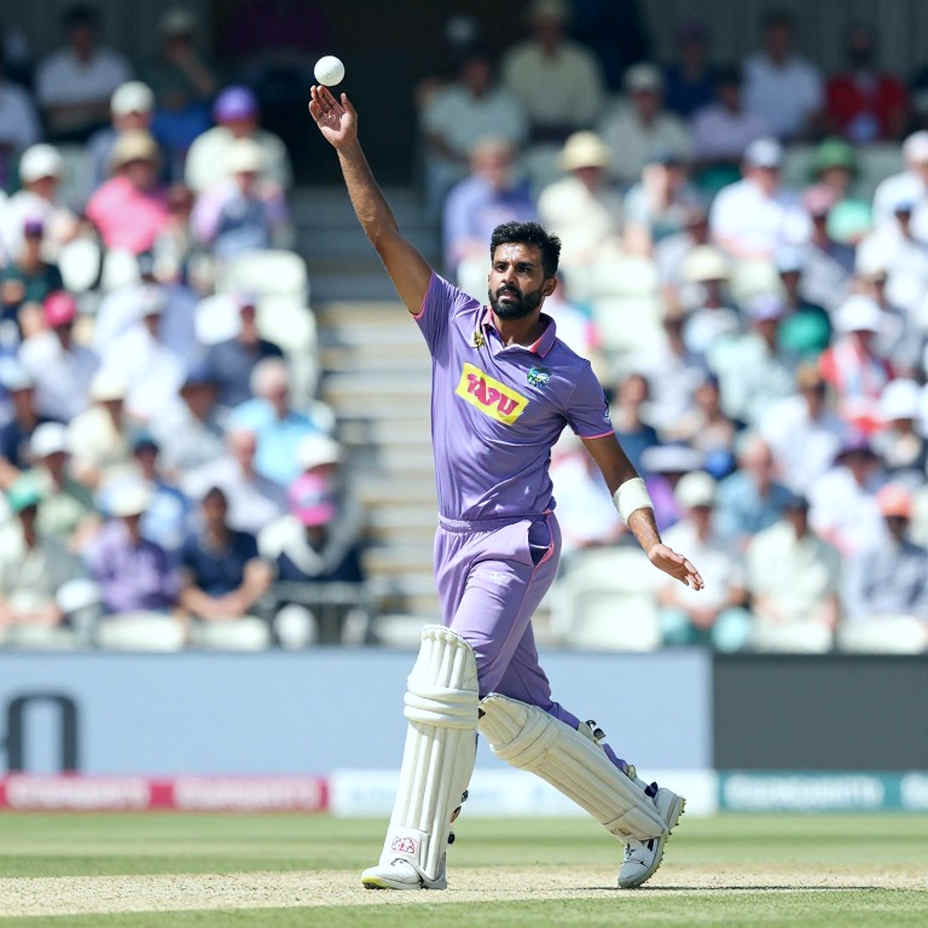
Facing 79 balls is not 79 deliveries. Behind every six is a body uncoiling, behind every quick two is a sprint, behind the fielding innings are dives and throws. In a 267-run game, staying on the field means more than two hours of fielding. A twenty-year-old can absorb that load; recovery is a different calculation.
I do not chase narratives; I chase the load that makes them break. Where a muscle load sits the week after a record innings says more about a young player's future than the next scorecard. With an injury history, that ledger has to be read more strictly.
The contrarian angle: the double century, and a two-innings sample
The source says he was well on course for a double century. That is opinion, not fact. No double century has ever been made in recognised top-level T20 cricket. Being on course is colour, not a data point.
The second discomfort is the form story. His previous innings is cited as 101 off 53 for South Africa against Namibia in a T20I. Two innings do not make a trend, and a century against Namibia is not the same examination as a century against an IPL attack. Sample size is the largest limitation here, and it is the one nobody writes down.
The third layer is economic. A record is a hypothesis; the next match is the experiment. A big score in a domestic competition quickly turns into a valuation story, and the price rises on a single innings of evidence. Paying a large fee for someone with fewer than fifty top-flight games is gambling, not investment. This record could become another token in that gamble if the tier gap is not read properly.
A boundary-driven innings is also easier on provincial surfaces: shorter boundaries, less swing, less bounce. With no ground or pitch data, I keep that as a possible explanation rather than a verdict. Spain versus Russia was not an upset; it was a passing-lane map unfolding — what looks sudden usually has a structure underneath. Here the structure is the competition tier and the missing bowling plan.

What I will watch next
First: his strike rate against quality spin. Second: whether he can rotate strike when boundaries are shut down, meaning whether that non-boundary strike rate of 98 moves upward. Third: whether bowlers finally close the gap with wide yorkers and slower balls. Fourth: with an injury history, how his load holds across consecutive matches.
The record is worth remembering, not worth deciding on. One innings builds a hypothesis; the next five test it. From Rangpur to the half-space, every map is a letter to a future coach — and this map still has a lot of blank space.